Web Development
Custom Software Development Company in Bangladesh
Super Admin
Author
September 19, 2026
13 min read
7 views
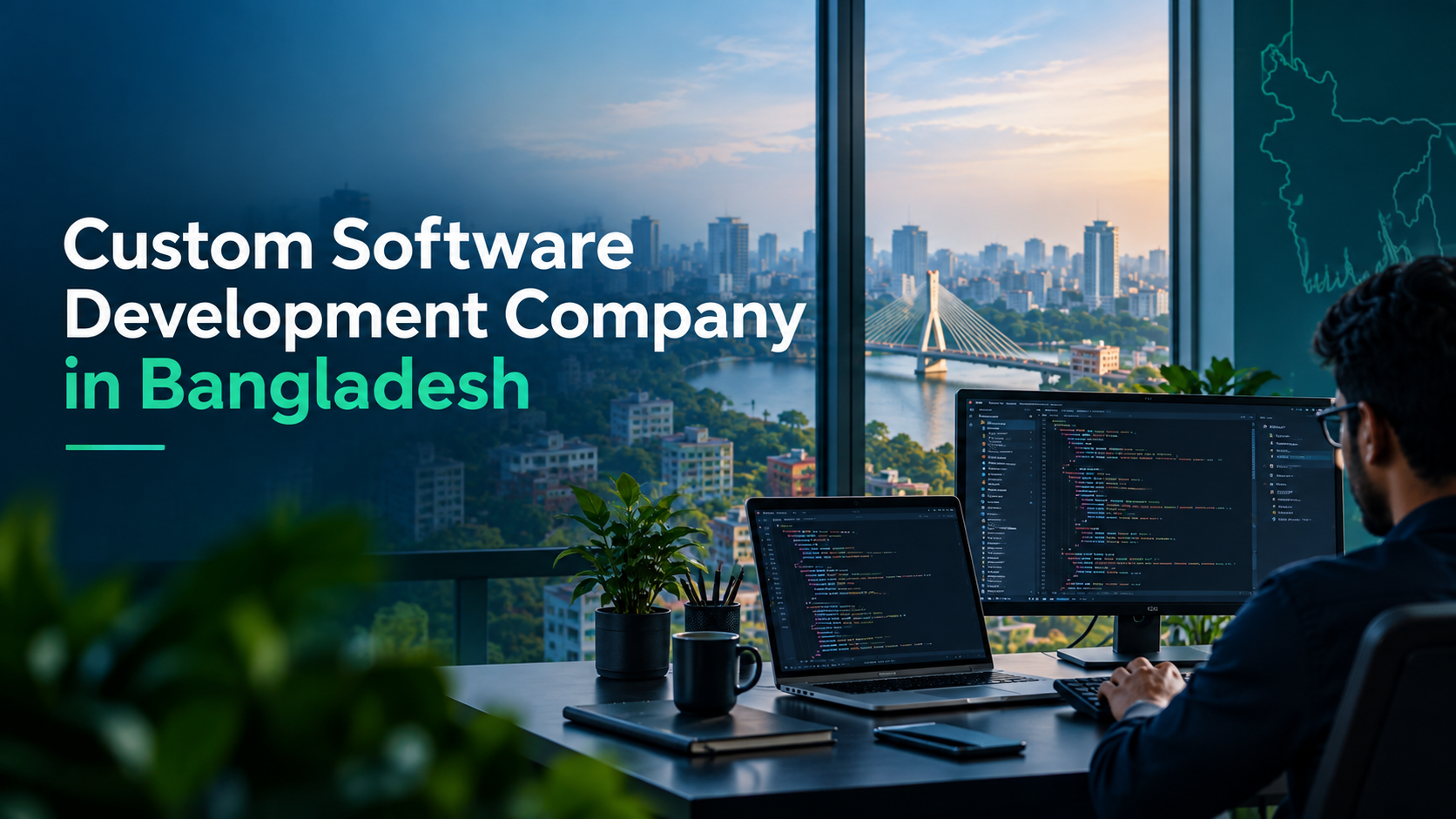
<p>Looking for a reliable <strong>custom software development company in Bangladesh</strong>? Cloud House Technologies helps businesses, startups, organizations, and institutions transform their ideas and operational challenges into practical digital solutions. We develop custom business software, SaaS platforms, ERP and management systems, e-commerce applications, mobile apps, APIs, and workflow automation solutions tailored to specific business requirements. Our experienced development team works with modern technologies including Laravel, PHP, Python, Vue.js, Flutter, MySQL, PostgreSQL, and cloud infrastructure. From requirement analysis and software architecture to development, testing, deployment, and ongoing maintenance, we provide complete software development support. Whether you need to automate manual processes, integrate multiple systems, launch a new digital product, or scale an existing platform, Cloud House Technologies can help build secure, scalable, and business-focused software solutions.</p>
<h1>Custom Software Development Company in Bangladesh</h1><p>Businesses today rely on software for much more than basic record keeping. From managing customers and inventory to processing payments, monitoring operations, communicating with employees, and analyzing business performance, software has become a core part of modern business infrastructure.</p><p>However, not every business can operate effectively with an off-the-shelf application. Standard software is designed for a broad market, while every organization has its own processes, approval systems, reporting requirements, customers, and operational challenges.</p><p>This is where a <strong>custom software development company in Bangladesh</strong> can make a significant difference.</p><p><strong>Cloud House Technologies</strong> provides custom software development services for businesses, organizations, startups, and institutions that need software designed around their actual operations. Instead of forcing a business to change its workflow to fit a generic application, we build software that fits the business.</p><p>Our approach combines business analysis, software engineering, modern web technologies, mobile application development, API integration, cloud infrastructure, and long-term maintenance to create practical software solutions that can grow with an organization.</p><h2>What Is Custom Software Development?</h2><p>Custom software development is the process of designing and developing software specifically for a particular organization, business model, or operational requirement.</p><p>For example, a manufacturing company may need software to manage production, raw materials, batches, warehouses, dealers, distributors, and sales. A school may need a system for student admission, attendance, examinations, fees, teachers, guardians, and academic reporting.</p><p>Instead of purchasing several unrelated applications, the organization can have a unified software platform designed around its requirements.</p><p>Custom software can include:</p><ul><li><p>Business management systems</p></li><li><p>ERP and enterprise applications</p></li><li><p>CRM systems</p></li><li><p>Inventory management software</p></li><li><p>Accounting and financial applications</p></li><li><p>School and education management systems</p></li><li><p>Hospital and healthcare management platforms</p></li><li><p>E-commerce platforms</p></li><li><p>SaaS applications</p></li><li><p>Payment and collection systems</p></li><li><p>HR and payroll systems</p></li><li><p>Customer portals</p></li><li><p>Mobile applications</p></li><li><p>API-based platforms</p></li><li><p>Workflow automation systems</p></li><li><p>Data management platforms</p></li><li><p>Government and institutional portals</p></li></ul><p>The objective is not simply to develop software. The objective is to solve a business problem using software.</p><h2>Cloud House Technologies: Custom Software Development in Bangladesh</h2><p><strong>Cloud House Technologies</strong> is a Bangladesh-based software development company focused on developing practical technology solutions for businesses and organizations.</p><p>Our development philosophy is based on understanding the business first and writing software second.</p><p>A successful software project starts with questions such as:</p><ul><li><p>What problem is the software solving?</p></li><li><p>Who will use the system?</p></li><li><p>What is the existing workflow?</p></li><li><p>Which processes are manual?</p></li><li><p>Where are errors occurring?</p></li><li><p>What information needs to be collected?</p></li><li><p>What reports does management require?</p></li><li><p>Which third-party services need to be integrated?</p></li><li><p>How will the system scale as the business grows?</p></li></ul><p>Once these questions are understood, we design the software architecture and user experience around the actual requirements.</p><p>This approach helps avoid a common problem in software projects: building a technically impressive application that does not properly solve the organization's operational problems.</p><h2>Why Businesses Choose Custom Software</h2><p>There are many reasons an organization may move from generic software to a custom-built solution.</p><h3>1. Software Designed Around Your Workflow</h3><p>Every business has its own way of working.</p><p>A distribution company may have multiple levels of dealers and distributors. A manufacturing company may require production planning and batch tracking. A financial organization may need approval workflows and reconciliation.</p><p>Custom software allows these processes to become part of the application.</p><p>Instead of employees creating spreadsheets, sending messages, maintaining paper records, and manually transferring information between systems, the software can connect the workflow into a single platform.</p><h3>2. Better Operational Efficiency</h3><p>Manual processes consume time.</p><p>For example, imagine a company where sales representatives collect orders through phone calls or messaging applications. Someone in the office then enters those orders into a spreadsheet. Another employee prepares invoices, while another person updates inventory.</p><p>A properly designed software system can connect these activities.</p><p>A sales representative can enter an order directly into the system. Inventory can be checked automatically. The relevant team can receive the order, and management can see the status from a dashboard.</p><p>The result is not simply "new software." It is a more efficient operating process.</p><h3>3. Centralized Information</h3><p>Businesses often have information spread across spreadsheets, computers, email accounts, paper documents, and different applications.</p><p>This creates problems with consistency and accessibility.</p><p>Custom software can bring important information into one controlled platform.</p><p>Depending on the system, users can access:</p><ul><li><p>Customers</p></li><li><p>Products</p></li><li><p>Orders</p></li><li><p>Payments</p></li><li><p>Inventory</p></li><li><p>Employees</p></li><li><p>Documents</p></li><li><p>Transactions</p></li><li><p>Reports</p></li><li><p>Operational records</p></li></ul><p>from a centralized environment.</p><h3>4. Better Management Reporting</h3><p>Management needs information to make decisions.</p><p>A custom system can provide dashboards and reports based on the organization's actual KPIs.</p><p>For example, a management dashboard could show:</p><ul><li><p>Daily sales</p></li><li><p>Monthly revenue</p></li><li><p>Outstanding payments</p></li><li><p>Inventory position</p></li><li><p>Customer activity</p></li><li><p>Sales performance</p></li><li><p>Branch performance</p></li><li><p>Production status</p></li><li><p>Expense information</p></li><li><p>Operational trends</p></li></ul><p>Instead of manually preparing reports every month, the system can generate them automatically.</p><h2>Our Custom Software Development Services</h2><p>Cloud House Technologies provides software development services across different business requirements.</p><h3>Business Management Software</h3><p>We develop customized business management systems that can bring different operational activities together.</p><p>Depending on requirements, a system may include:</p><ul><li><p>Customer management</p></li><li><p>Product management</p></li><li><p>Sales</p></li><li><p>Purchasing</p></li><li><p>Inventory</p></li><li><p>Accounts</p></li><li><p>Employee management</p></li><li><p>Reporting</p></li><li><p>Notifications</p></li><li><p>Document management</p></li><li><p>User permissions</p></li></ul><p>The modules are selected according to the organization's actual needs.</p><h3>ERP Software Development</h3><p>Enterprise Resource Planning systems connect different departments and business processes.</p><p>A customized ERP solution can combine areas such as:</p><ul><li><p>Procurement</p></li><li><p>Inventory</p></li><li><p>Production</p></li><li><p>Sales</p></li><li><p>Distribution</p></li><li><p>Finance</p></li><li><p>Human resources</p></li><li><p>Customer management</p></li><li><p>Reporting</p></li></ul><p>For organizations with complex operations, a customized ERP can be more suitable than trying to combine several unrelated software products.</p><h3>SaaS Application Development</h3><p>Cloud House Technologies also develops Software-as-a-Service platforms.</p><p>A SaaS application allows customers to use software through the internet, generally through a subscription or usage-based model.</p><p>A SaaS platform may require:</p><ul><li><p>Multi-tenant architecture</p></li><li><p>Subscription management</p></li><li><p>Customer accounts</p></li><li><p>Role-based access</p></li><li><p>Billing</p></li><li><p>API access</p></li><li><p>Usage monitoring</p></li><li><p>Notifications</p></li><li><p>Administrative dashboards</p></li><li><p>Automated onboarding</p></li></ul><p>Building SaaS software requires thinking beyond individual features. The architecture must support multiple customers while maintaining appropriate separation, security, and performance.</p><h3>Web Application Development</h3><p>Modern businesses increasingly require applications rather than traditional websites.</p><p>A web application can provide authenticated dashboards, business workflows, data processing, reporting, and integrations.</p><p>Cloud House Technologies develops web applications using modern technologies and frameworks selected according to project requirements.</p><p>For many projects, our preferred architecture includes <strong>Laravel for backend/API development and Vue.js for modern frontend applications</strong>.</p><p>This combination provides a flexible foundation for developing scalable business applications.</p><h3>Mobile Application Development</h3><p>Customers and employees increasingly expect access to business services through mobile devices.</p><p>Cloud House Technologies can develop mobile applications for Android and iOS requirements.</p><p>Mobile applications can be connected with a central backend through secure APIs.</p><p>Examples include:</p><ul><li><p>Customer applications</p></li><li><p>Employee applications</p></li><li><p>Delivery applications</p></li><li><p>Sales applications</p></li><li><p>Booking applications</p></li><li><p>Financial applications</p></li><li><p>Education applications</p></li><li><p>Service applications</p></li></ul><p>For cross-platform development, technologies such as Flutter can help reduce development duplication while maintaining a modern mobile experience.</p><h3>API Development and Integration</h3><p>Modern software rarely operates in isolation.</p><p>A business application may need to communicate with:</p><ul><li><p>Payment gateways</p></li><li><p>SMS providers</p></li><li><p>Email services</p></li><li><p>Accounting systems</p></li><li><p>Government databases</p></li><li><p>E-commerce platforms</p></li><li><p>Shipping systems</p></li><li><p>CRM platforms</p></li><li><p>Mobile applications</p></li><li><p>Third-party APIs</p></li></ul><p>Cloud House Technologies develops APIs that allow different systems to exchange information securely.</p><p>API-first architecture can also make future integrations easier because the same backend services can support websites, mobile applications, partner systems, and internal tools.</p><h2>Custom E-Commerce Software Development</h2><p>E-commerce requirements can vary significantly between businesses.</p><p>A simple online store may only require product listings, cart, checkout, payment, and order management.</p><p>A larger organization may require:</p><ul><li><p>Multiple vendors</p></li><li><p>Product variations</p></li><li><p>Advanced inventory</p></li><li><p>Warehouse management</p></li><li><p>Dynamic pricing</p></li><li><p>Customer-specific pricing</p></li><li><p>Coupon management</p></li><li><p>Shipping integration</p></li><li><p>Payment integration</p></li><li><p>Sales reporting</p></li><li><p>Loyalty programs</p></li><li><p>Dealer management</p></li></ul><p>Custom e-commerce development allows these requirements to be incorporated into a single platform.</p><p>This can be particularly useful when the organization's business model does not fit conventional e-commerce platforms.</p><h2>Software for Automation and Digital Transformation</h2><p>Digital transformation is not simply about moving paper documents onto a computer.</p><p>It involves redesigning business processes using technology.</p><p>For example, a manual approval process might involve:</p><ol><li><p>An employee prepares a document.</p></li><li><p>The document is printed.</p></li><li><p>A manager signs it.</p></li><li><p>The document is sent to another department.</p></li><li><p>Someone enters the information into a spreadsheet.</p></li><li><p>Management later requests a report.</p></li></ol><p>A custom application can transform the same process into a digital workflow.</p><p>The employee submits the request through the application. The responsible manager receives a notification. The manager approves or rejects it. The system records the decision and updates the relevant records automatically.</p><p>This reduces unnecessary manual work and creates a traceable history of activities.</p><h2>Our Technology Approach</h2><p>Technology selection should depend on the requirements rather than trends.</p><p>At Cloud House Technologies, we work with modern technologies including:</p><ul><li><p>PHP</p></li><li><p>Laravel</p></li><li><p>Python</p></li><li><p>Django</p></li><li><p>Flask</p></li><li><p>Vue.js</p></li><li><p>JavaScript</p></li><li><p>Flutter</p></li><li><p>MySQL</p></li><li><p>PostgreSQL</p></li><li><p>REST APIs</p></li><li><p>Linux</p></li><li><p>Docker</p></li><li><p>Cloud and VPS infrastructure</p></li></ul><p>For a typical business application, Laravel can provide the backend architecture and API layer, while Vue.js can provide a responsive application interface.</p><p>For mobile applications, Flutter can provide a cross-platform development approach.</p><p>The exact technology stack is determined by factors such as:</p><ul><li><p>Project complexity</p></li><li><p>Expected traffic</p></li><li><p>Security requirements</p></li><li><p>Integration requirements</p></li><li><p>Development budget</p></li><li><p>Future scalability</p></li><li><p>Maintenance requirements</p></li></ul><h2>How Our Software Development Process Works</h2><p>A structured development process helps reduce unnecessary changes and misunderstandings.</p><h3>Step 1: Requirement Analysis</h3><p>We begin by understanding the organization and its objectives.</p><p>We identify users, workflows, business rules, reports, integrations, and technical requirements.</p><p>The result is a clearer definition of what the software needs to accomplish.</p><h3>Step 2: Software Requirements Specification</h3><p>For larger projects, requirements can be documented through a Software Requirements Specification.</p><p>An SRS may describe:</p><ul><li><p>Functional requirements</p></li><li><p>User roles</p></li><li><p>Modules</p></li><li><p>Business rules</p></li><li><p>Workflows</p></li><li><p>Reports</p></li><li><p>Notifications</p></li><li><p>API requirements</p></li><li><p>Security requirements</p></li><li><p>Technical requirements</p></li></ul><p>This provides a reference point for both the client and development team.</p><h3>Step 3: Architecture and UI Planning</h3><p>After requirements are defined, we plan the technical architecture.</p><p>We also consider the user experience.</p><p>A powerful system is not useful if employees find it difficult to operate. Therefore, usability is considered alongside technical functionality.</p><h3>Step 4: Development</h3><p>Development is divided into manageable modules.</p><p>Depending on the project, development may include backend services, frontend applications, databases, APIs, mobile applications, administrative dashboards, and third-party integrations.</p><h3>Step 5: Testing</h3><p>Testing is performed throughout development.</p><p>We check functionality, validation, permissions, workflows, responsiveness, API communication, and other project-specific requirements.</p><h3>Step 6: Deployment</h3><p>Once the software is ready, it can be deployed to the appropriate infrastructure.</p><p>Depending on the project, this may involve:</p><ul><li><p>VPS</p></li><li><p>Dedicated server</p></li><li><p>Cloud infrastructure</p></li><li><p>Local server</p></li><li><p>Private infrastructure</p></li></ul><p>We can also assist with server configuration, deployment, domain configuration, SSL, backups, and related infrastructure requirements.</p><h3>Step 7: Training and Documentation</h3><p>Software adoption depends heavily on the users.</p><p>For business applications, user training and documentation can help employees understand the system and reduce operational friction.</p><h3>Step 8: Maintenance and Support</h3><p>Software development does not necessarily end after deployment.</p><p>Businesses may require:</p><ul><li><p>Bug fixes</p></li><li><p>Security updates</p></li><li><p>Server monitoring</p></li><li><p>Performance optimization</p></li><li><p>New features</p></li><li><p>API changes</p></li><li><p>Database maintenance</p></li><li><p>Backup management</p></li><li><p>Technical support</p></li></ul><p>Cloud House Technologies can provide ongoing maintenance and development support according to project requirements.</p><h2>Custom Software Development for SMEs in Bangladesh</h2><p>Small and medium-sized businesses often assume custom software is only suitable for large corporations.</p><p>That is not necessarily true.</p><p>An SME may benefit from a relatively focused application that solves one or two important operational problems.</p><p>For example, a growing distributor may initially need only:</p><ul><li><p>Customer management</p></li><li><p>Product management</p></li><li><p>Sales</p></li><li><p>Inventory</p></li><li><p>Payment tracking</p></li><li><p>Basic reporting</p></li></ul><p>As the business grows, additional modules can be introduced.</p><p>This modular approach can be more practical than attempting to build a massive system from the beginning.</p><h2>Custom Software Development for Startups</h2><p>Startups have different priorities.</p><p>They often need to launch quickly, test their business model, collect customer feedback, and modify the product based on actual market behavior.</p><p>For startups, we can help develop MVPs and scalable product architectures.</p><p>The development process can focus on:</p><ul><li><p>Core functionality</p></li><li><p>Fast deployment</p></li><li><p>User feedback</p></li><li><p>Product validation</p></li><li><p>API architecture</p></li><li><p>Future scalability</p></li></ul><p>Once the product gains traction, additional features can be introduced without necessarily rebuilding the entire platform.</p><h2>Security in Custom Software</h2><p>Security should be considered from the beginning of a software project.</p><p>Depending on the nature of the application, security considerations can include:</p><ul><li><p>Authentication</p></li><li><p>Role-based authorization</p></li><li><p>Password protection</p></li><li><p>Secure API authentication</p></li><li><p>Input validation</p></li><li><p>Data encryption</p></li><li><p>Secure file handling</p></li><li><p>Audit logs</p></li><li><p>Database security</p></li><li><p>Backup strategies</p></li><li><p>Server security</p></li><li><p>Session management</p></li></ul><p>Financial, healthcare, government, and enterprise applications may require additional security controls depending on their regulatory and operational requirements.</p><p>A secure system is not created through one feature. Security is a continuous consideration across the application, infrastructure, database, and operational processes.</p><h2>Why Choose a Bangladesh-Based Software Development Company?</h2><p>Bangladesh has a growing technology industry and a large pool of software professionals.</p><p>For organizations operating in Bangladesh, working with a local development company can also provide practical advantages.</p><p>Local teams understand the business environment, communication style, local payment methods, operational practices, and requirements that international software vendors may not always understand.</p><p>At the same time, Bangladeshi software companies can work with international clients and develop applications according to global technical standards.</p><p>Cloud House Technologies works with the objective of combining practical business understanding with modern software engineering.</p><h2>Custom Software vs Ready-Made Software</h2><p>There is no universal answer to whether custom software or ready-made software is better.</p><p>The appropriate choice depends on the business.</p><p>Ready-made software may be suitable when:</p><ul><li><p>The business process is standard</p></li><li><p>The available features are sufficient</p></li><li><p>Customization is not important</p></li><li><p>The organization wants rapid deployment</p></li></ul><p>Custom software may be appropriate when:</p><ul><li><p>The workflow is unique</p></li><li><p>Multiple systems need integration</p></li><li><p>Existing software creates operational limitations</p></li><li><p>Specific reports are required</p></li><li><p>The business model requires specialized functionality</p></li><li><p>The organization wants control over future development</p></li></ul><p>The important question is not simply "Should we build custom software?"</p><p>The better question is:</p><p><strong>Does the business problem justify a customized technology solution?</strong></p><h2>How Much Does Custom Software Development Cost in Bangladesh?</h2><p>The cost of custom software development depends heavily on scope.</p><p>A simple internal application can cost significantly less than a large enterprise platform involving mobile apps, APIs, payment integrations, advanced reporting, and complex workflows.</p><p>Factors affecting development cost include:</p><ul><li><p>Number of modules</p></li><li><p>Number of user types</p></li><li><p>UI complexity</p></li><li><p>Backend complexity</p></li><li><p>Mobile applications</p></li><li><p>API development</p></li><li><p>Third-party integrations</p></li><li><p>Security requirements</p></li><li><p>Reporting requirements</p></li><li><p>Infrastructure</p></li><li><p>Testing requirements</p></li><li><p>Maintenance requirements</p></li></ul><p>At Cloud House Technologies, we prefer to define the scope before providing a project estimate.</p><p>This makes the pricing more transparent because the client can understand what is included rather than receiving a price for an undefined software project.</p><h2>Building Software That Can Grow With Your Business</h2><p>One of the biggest mistakes in software development is designing only for today's requirements.</p><p>A business that has 100 customers today may have 10,000 customers in the future.</p><p>Therefore, software architecture should consider future growth.</p><p>Scalability can involve:</p><ul><li><p>Database design</p></li><li><p>Application architecture</p></li><li><p>API architecture</p></li><li><p>Caching</p></li><li><p>Queue systems</p></li><li><p>Server resources</p></li><li><p>Backup strategies</p></li><li><p>Modular development</p></li></ul><p>Good architecture does not mean over-engineering every project. It means making reasonable technical decisions based on expected business growth.</p><h2>Our Approach to Long-Term Software Partnerships</h2><p>Cloud House Technologies does not view software development only as a one-time transaction.</p><p>Businesses change.</p><p>New employees join. New branches open. New products are introduced. Regulations change. Customers demand new services. Third-party APIs are updated.</p><p>Software must evolve alongside the organization.</p><p>For this reason, we can work with clients beyond the initial development stage through maintenance, improvements, integrations, optimization, and additional development.</p><p>This creates an ongoing technology partnership rather than simply delivering a software package and walking away.</p><h2>Looking for a Custom Software Development Company in Bangladesh?</h2><p>Choosing a software development partner is an important business decision.</p><p>Before starting a project, organizations should consider the development team's technical capabilities, communication process, understanding of business requirements, maintenance approach, technology choices, security practices, and ability to support the software after launch.</p><p>At <strong>Cloud House Technologies</strong>, our focus is straightforward: understand the business, design an appropriate solution, build reliable software, and provide the technical support required to keep the system useful over time.</p><p>Whether you need a business management system, SaaS platform, e-commerce application, mobile app, API-based platform, workflow automation system, or a completely customized enterprise solution, we can discuss the requirements and determine the most practical technical approach.</p><h3>Start Your Software Project</h3><p>If your business is currently relying on spreadsheets, disconnected applications, manual processes, or software that does not match your workflow, it may be time to consider a custom solution.</p><p>Cloud House Technologies can help you move from an idea or business requirement to a structured software platform.</p><p><strong>Tell us what you want to build, what problem you are trying to solve, and how your current process works. We can help you identify the requirements, recommend an appropriate technology approach, estimate the development scope, and plan the implementation.</strong></p><p><strong>Cloud House Technologies — Custom Software Development Company in Bangladesh.</strong></p>
Tags:
#Custom Software Development
#Custom Software Development Company
#Software Development Company Bangladesh
#Custom Software Company Bangladesh
#Software Company in Bangladesh
#Software Development Bangladesh
#Web Application Development
#Business Software Development
#Enterprise Software Development
#SaaS Development
#Software Solutions Bangladesh
#IT Company Bangladesh
#Software Development Services
#Laravel Development
#PHP Development
#Python Development
#Django Development
#Vue.js Development
#Flutter App Development
#Mobile App Development
#API Development
#ERP Software Development
#E-commerce Development
#Business Automation
#Cloud Software Development
#Cloud House Technologies
#Cloud House Bangladesh
#Software Company in Dhaka
#Custom Software Company in Dhaka
#Bangladesh Software Development Company
#IT Solutions Bangladesh
#Software Development Services in Bangladesh
S
Super Admin
Author at Cloud House Technologies